
Favorite Fall Plants
As the air gets crispier and the leaves get crunchier, your skin is going to (unfortunately) start to have the same effect. Many of my clients (especially my inflammatory clients) love how much their skin is healed in the summertime. This is not for any random reason: Vitamin D encourages wound healing by decreasing inflammation and preventing bacterial growth.
Daylight will shrink, temperatures will plummet preventing people from going outside, humidity drops drastically, and the lake in Chicago causes Arctic air to come down. Fret not my fairies: there are ways to combat this. Even if you do not see an esthetician routinely, seeing one seasonally to help shift your skincare by swapping out some items is still very beneficial.
Thus, this brings us to my list of favorite plants to use in my treatment room during the wintertime and the benefits they have for your skin on a cellular level:
Calendula
Calendula is an incredible brightening and anti-inflammatory plant to give your skin a boost while adjusting to the change in temperatures. Calendula contains flavonoids which is a family of organic compounds with powerful antioxidant and anti-inflammatory properties. This gel mask also contains hyaluronic acid to provide a lasting hydration by binding water molecules to proteins in the membrane of your skin cells.
The combination of hydrosols and glycerin in the mask also delivers terpenes (a natural chemical compound) to the skin for an anti-viral and anti-inflammatory effect in the skin.
Calendula also supports your lymphatic system, so you may notice a slight flushing after the mask is applied. Calendula encourages natural movement and promotes circulation of lymphatic fluid.
Kale
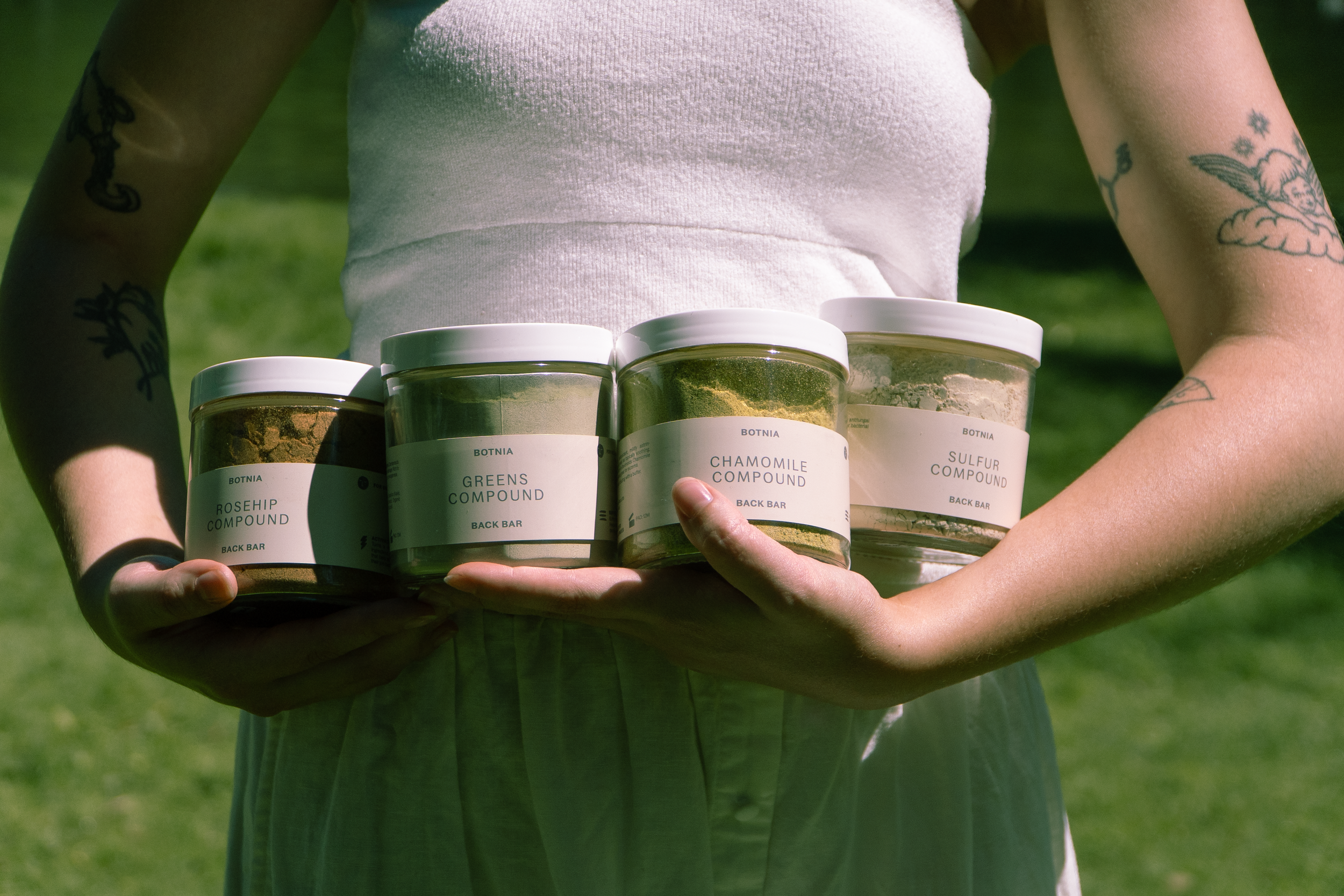
I’ll usually tell clients “you’re about to smell something similar to an organic green juice” before applying kale. All compounds that Botnia uses contain the whole plant after being freeze-dried and grinded down. Freeze-drying the plant allows for a higher percentage of nutrients from the plant to remain versus dehydration, which uses heat and breaks down a lot of the vitamins and nutrients from the plants.
Kale contains vitamin A, which I love to use on sun-kissed clients after long summer travel and re-acclimating their skin to the cooler weather. Vitamin A promotes cellular growth and helps repair damaged skin cells.
Kale also contains vitamin K1 and manganese. Vitamin K1 improves elasticity and mitigates dark circles in the skin by promoting blood flow. Manganese plays an important role in collagen production and functions as an antioxidant. Kale is amazing when paired with the rosehips compound for better brightening effect in dull, winter skin.
Colloidal Oats
You’re never going to hear me shut up about colloidal oats. If I ever do, something is very wrong. This has been my personal skin savior with my eczema and dermatitis, and I recommend a colloidal oat mask to any client experiencing irritation. I probably put this in majority of masks I mix.
Colloidal refers to the particle size, meaning the oats are more finely ground. It contains polysaccharides to help the skin retain moisture, profilaggrin to improve the skin barrier function, and beta-glucan to stimulate an immune response in the skin and heal damaged skin.
Special shoutouts
This serum is not a plant, but Botnia’s hydrating serum also contains rose geranium hydrosol, so I felt it deserved a special shoutout as I recommend this to every client this season. Rose geranium is amazing for an anti-inflammatory effect and feels great on every skin type. They also use a larger molecule for their hyaluronic acid in addition to glycerin, which strengthens the skin barrier against cold air and wind while providing a deep hydration.
Using this serum with Apoterra’s Vitamin C Balm is chef’s kiss. Apoterra uses an oil-soluble vitamin C along with rosehip oil, sea buckthorn berry, CoQ10, prickly pear seed oil, turmeric, and pomegrarante seed oil. I honestly think I need to make a whole post dedicated entirely to Apoterra’s Vitamin C Balm because of how amazing it is and how much my clients love it post-sunburn in the summertime and to lock in hydration in the wintertime. I will be restocking both these products in the very near future after opening my doors in Chicago.
This list is not exhaustive of every plant I use (including liquid plant compounds that are also added to your facials). I hope this gives a little insight into how intentional I am with every ingredient I use for your masks. I outline all plants I use at the end of every facial so you know what we used, and I look forward to providing more education on plants including at-home mask recipes!
